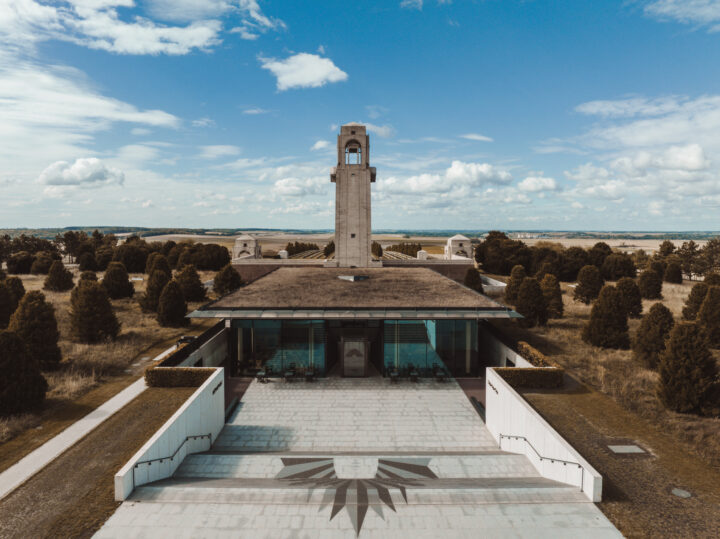
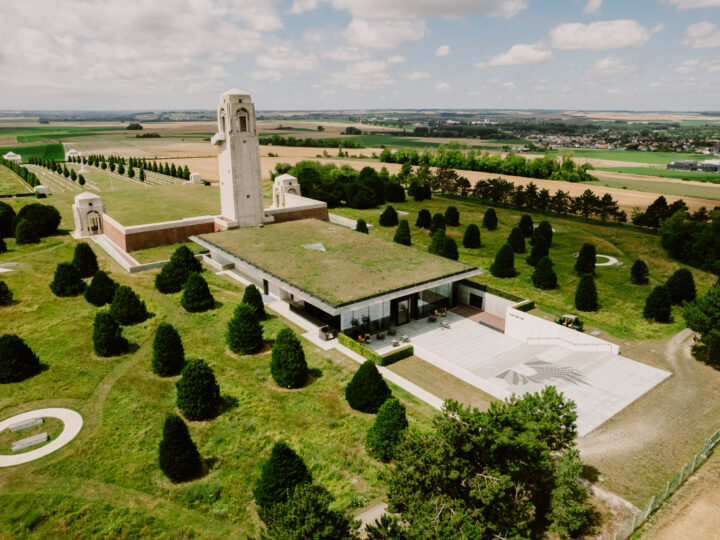
The Australian National Memorial Site
Set at the heart of the Somme countryside, the Australian National Memorial stands on land scarred by the First World War. A visit to this Memorial, the Villers-Bretonneux Military Cemetery, and the Sir John Monash Centre invites quiet reflection and remembrance of Australia’s role in this conflict.
The Australian National Memorial
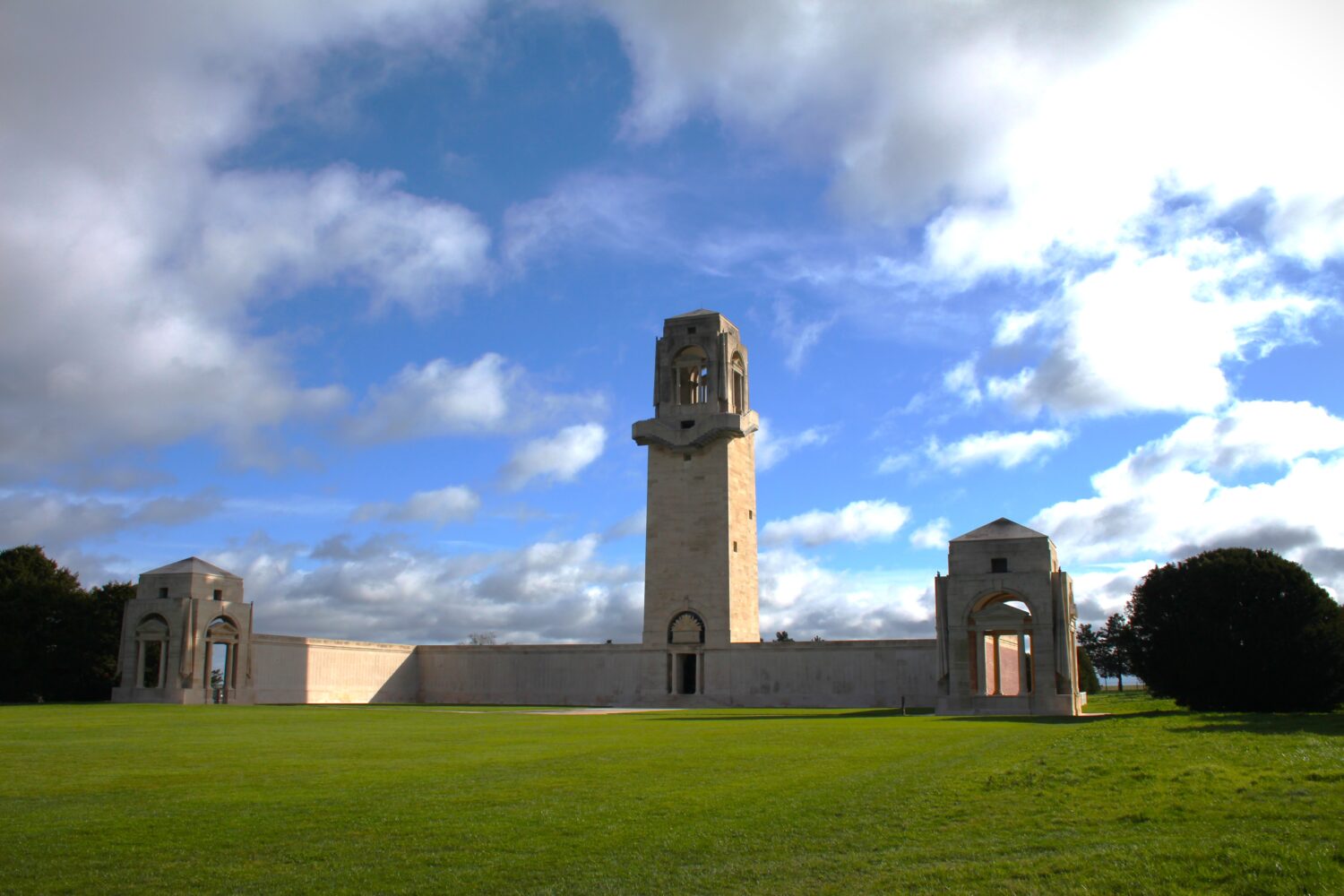
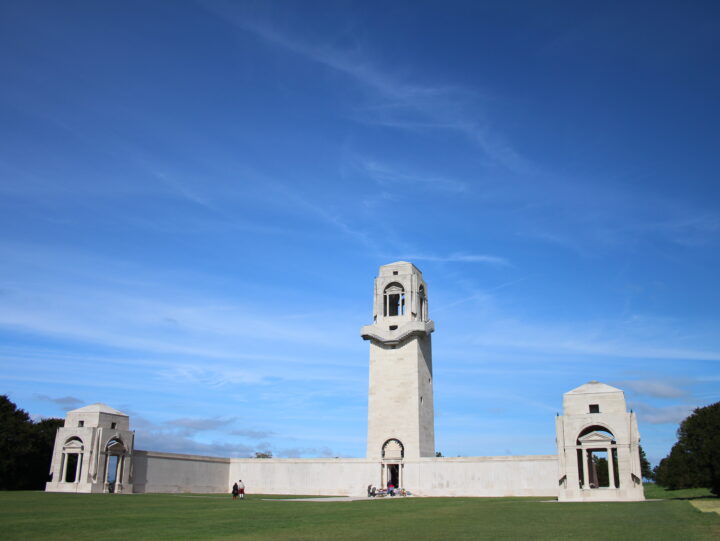
The Australian National Memorial, located across the back of the Villers-Bretonneux Military Cemetery honours the Australian soldiers who served in France and Belgium.
The Memorial was designed by British architect Sir Edwin Lutyens (who also designed the Thiepval Memorial) and was unveiled in 1938 by King George VI.
It consists of a central tower, with spectacular views of the surrounding countryside, flanked by wing walls commemorating the 10,796 Australian who died in France and who have no known grave. Along the upper edges of the Memorial, the battle honours of major engagements involving Australian troops in France and Belgium are inscribed.
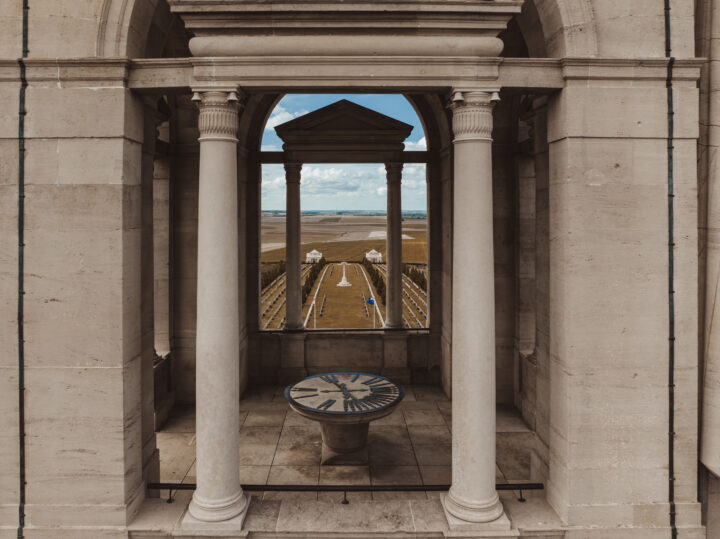
At the top of the tower, an orientation table points out sites linked to Australian history, as well as the location of other Australian memorials.
During the Second World War the Memorial was used as an observation post by the French Army and was extensively damaged by German aircraft and ground fire. Although repairs were carried out, some scarring was retained and can still be seen on parts of the Memorial and the cemetery.
Since 2023, the Memorial has been listed as a World Heritage Site as part of the inscription of 138 funerary and memory sites of the First World War from all nations engaged on the Western Front.
The Memorial tower is open to visitors every day during the opening hours of the Sir John Monash Centre.
The Villers-Bretonneux Military Cemetery
Villers-Bretonneux became renowned on 23 April 1918 when the German advance during the Spring Offensive led to the capture of the town by German infantry and tanks. On the following day, the 13th and 15th Brigades of the Australian 4th Division, supported by the Australian 5th Division, units of the British 8th and 18th Divisions and the French Moroccan Division, counterattacked and recaptured the town, a feat often credited with halting the German advance towards Amiens. On 8 August 1918, the 2nd and 5th Australian Divisions participated in the advance from the town’s eastern outskirts during the opening phase of the Battle of Amiens.
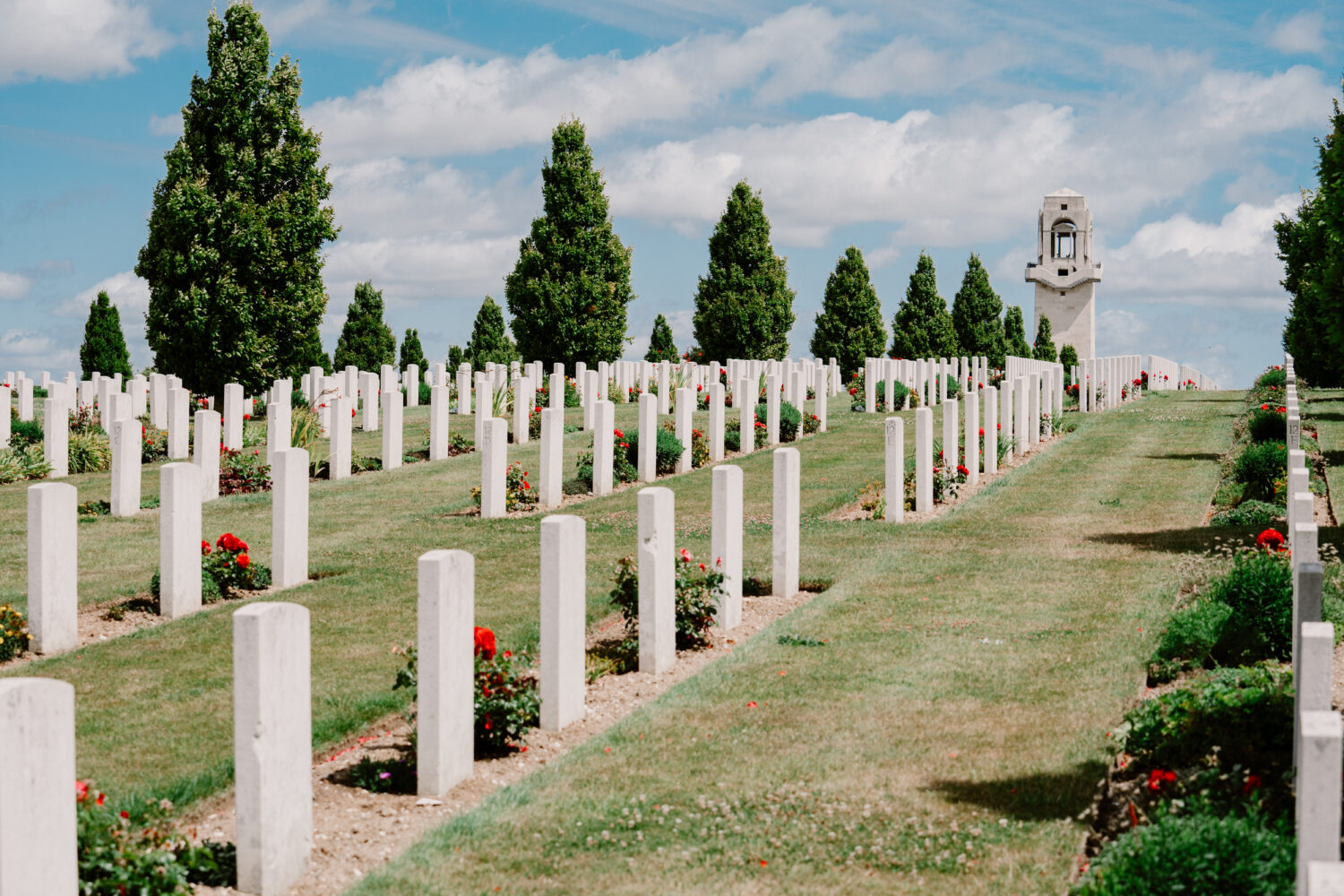
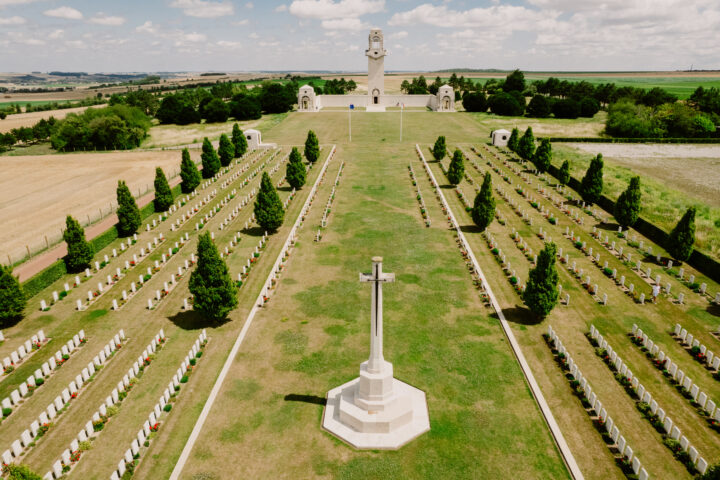
Established on the former ‘“Hill 104”’, the Villers-Bretonneux Military Cemetery was built after the Armistice when graves were brought in from other burial grounds across the adjacent former battlefields. A Stone of Remembrance and a Cross of Sacrifice stand in the cemetery, which is maintained by the Commonwealth War Graves Commission (CWGC).
The Cemetery contains the graves of 2144 Commonwealth servicemen from the First and Second World Wars of which more than 600 remain unidentified.
Learn more about the history and work of the Commonwealth War Graves Commission.
The Sir John Monash Centre
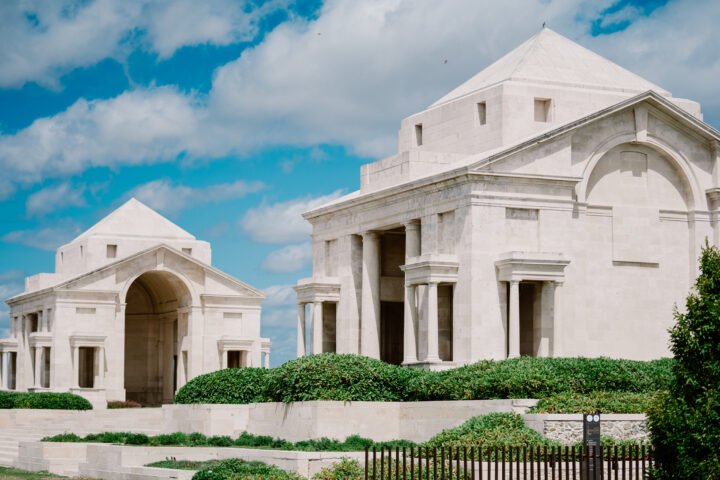
Located behind the Australian National Memorial, the Sir John Monash Centre tells the story of the Australian experience on the Western Front during the First World War.
The Centre’s location deliberately invites visitors to immerse themselves in the tranquillity of the Villers-Bretonneux Military Cemetery and the Australian National Memorial before delving into the narrative of the Interpretive Centre.
In the gardens, six benches commemorating the five Australian divisions and the Australian Flying Corps surround the main building, their emblems clearly visible from the top of the Memorial tower.