History
Back to NewsroomLife in the trenches
Trench warfare was a defining feature of the First World War. From late 1914 onwards, trenches became the daily environment for soldiers from all nations. For these soldiers, exposed to the many dangers of war, life in the trenches on the Western Front was both harsh and dangerous.
The war in the trenches
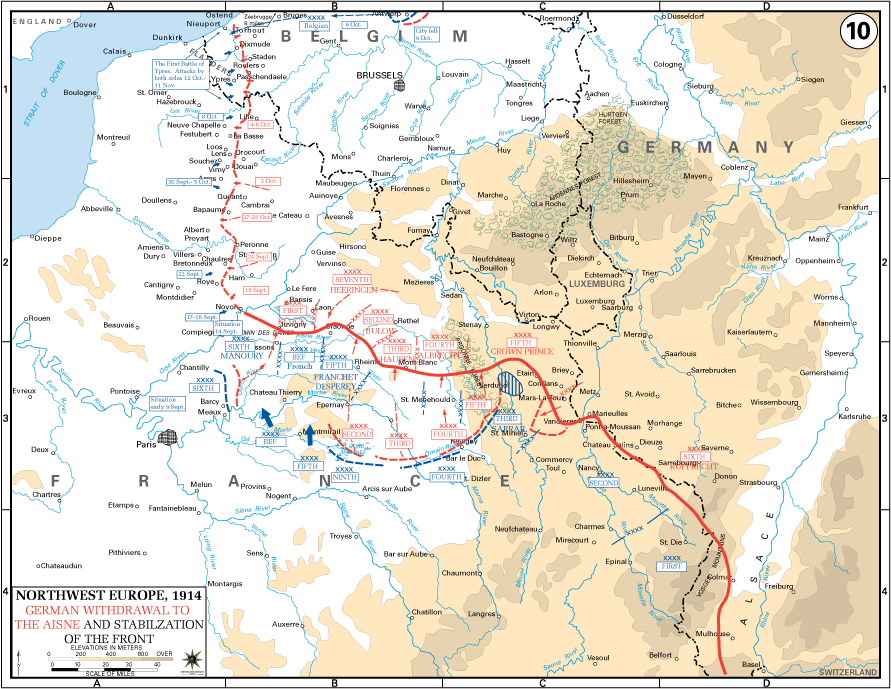
In September 1914, the French Army halted the German advance to the north of Paris in what quickly became known as the “Miracle of the Marne”. The German Army was pushed back over 60km, with the front line eventually solidifying around the river Aisne. As the front stabilised, the armies carried out a “race to the sea” with each side attempting to outflank the other to the north; failure to do so created a stalemate, forming a contiguous front line stretching from the Belgian coast to the Swiss border.
As the opposing sides’ defensive lines gradually became impenetrable, the war of movement gave way to one of position, and the need to protect soldiers from the artillery and bullets of the enemy led to the development of trenches. Initially, these often followed existing features such as sunken roads or drainage ditches.
By winter 1914, this vast network became the infernal, sinister and often muddy setting of the Western Front.
The concept of trenches was not completely new in 1914. They had been used on a smaller scale for centuries as part of sieges and in other conflicts such as the Boer War of 1899-1902 in South Africa, or the Russo-Japanese War of 1904.
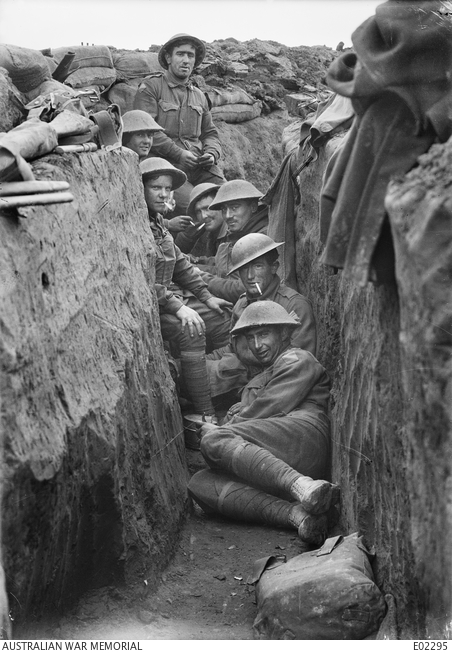
The trenches generally consisted of three supporting lines, spaced over a hundred metres, and connected by winding communication trenches. They were dug about 2 metres deep and topped with sandbag parapets. The walls were reinforced with wooden slats to prevent collapse during heavy rain, and the trenches featured numerous firing and lookout posts, machine-gun nests, and rough shelters

- No Man’s Land
- The first line of trenches was crenelated to protect against enfilade fire and reduce the impact of shell blasts. Its key functions were to protect infantry from enemy fire, allow soldiers to fire on the enemy from within the trench, act as a launching point for infantry.
- Positioned 70 to 100 metres behind the first line, the second-line trench acted as a fallback position, support base, or first rear defence during counterattacks. It contained shelters—sometimes deep and covered—lookout posts, and basic medical facilities.
- Located over 150 metres behind the first line, the third line functioned as a reserve trench, supply route, or, if necessary, a retreat path. It was usually less fortified, relying more on natural terrain for concealment. This line was more exposed to long-range artillery fire and primarily used for storage, supply, and as a rest area for soldiers.
- The communication trenches enabled movement and supply routes
The life in the Trenches
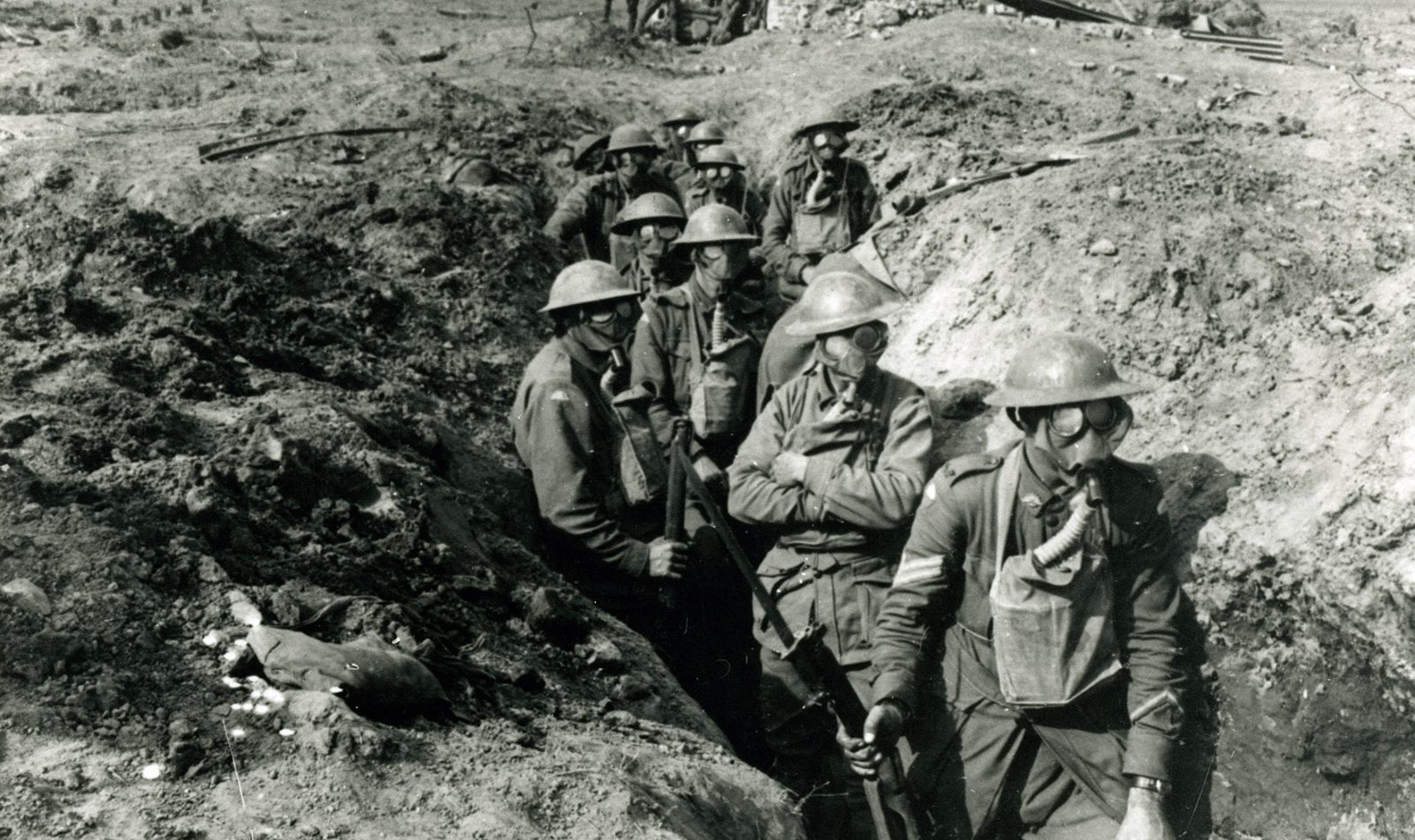
Soldiers had to contend daily with artillery, machine guns, enemy infantry and gas.
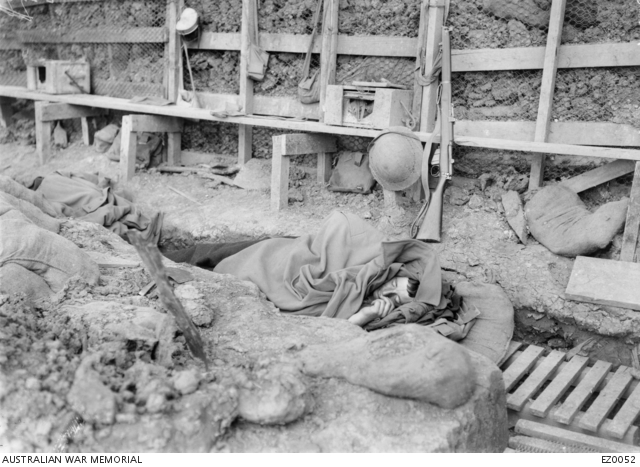
Despite weekly rotations, the trenches became the soldiers’ main living space—a place of constant danger and dreadful conditions. When not fighting, soldiers carried out routine work to maintain the trenches, laying barbed wire, patrolled, or endured long periods of waiting. Confined in such a small living space, feelings of claustrophobia were common among soldiers.
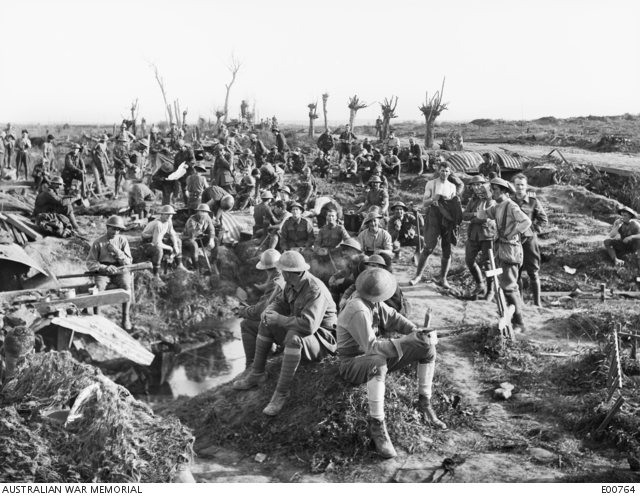
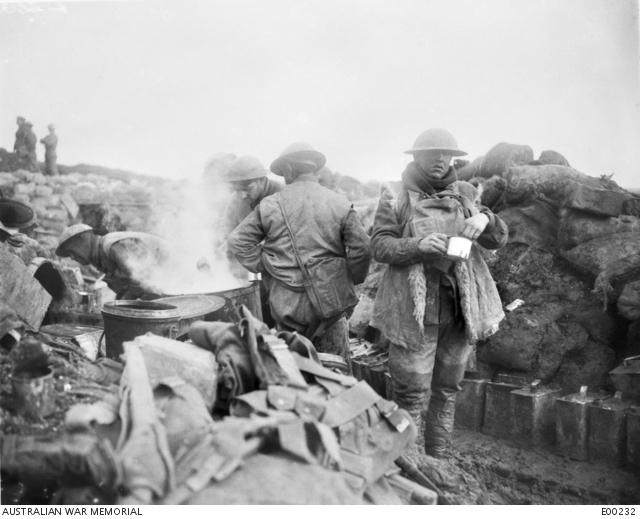
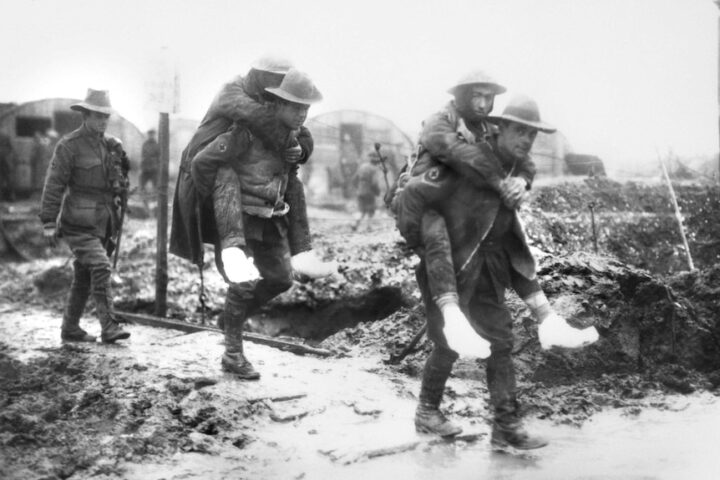
Harsh weather brought cold, rain, and mud, while sleep, hygiene, and warm meals were scarce. Clean water was rationed, and mud often covered everything.
Sanitation was terrible. Soldiers lived amid rats, lice, flies, waste, and corpses, which created a stench they called “the smell of death.” This filthy environment caused many illnesses, including dysentery, typhus, trench foot, and gangrene.
“Young and old alike are here, all doing their part for the defence of the Fatherland.
All day long, shells fall, bullets whistle, trench mortars too, and so on.
In my regiment, many are missing at roll call, there are wounded as well — and it’s not over yet.
As for rest, we can’t even think about it for now — always on the lookout.
If we manage to get any sleep, the rats are there to wake us up.
We’ve been very cold, but I think the water is worse. If only winter were over…
I was hoping to get leave around the 20th, for four days, but I have to wait until January 15. That is, if nothing happens to me before then…”
A letter from André to Marguerite 9 December 1915.

Another constant in a soldier’s life in the trenches was waiting. Soldiers were always waiting – for a meal, for post, for trench repairs, for relief, for orders to attack, and the ever-present threat of enemy fire.
This permanent fear of bombardment or sniper fire took a heavy toll on their nerves, adding to the immense physical strain they were already under.