
History
Back to NewsroomPrivate Gaston Griffart, a link between France and Australia
In November 2024, the Sir John Monash Centre received an unusual request: Mr Raymond Huggins, an Australian from Queensland, wanted to conduct some research into his grandfather, who died on the Western Front during the First World War. However, this research was not about a soldier from the Australian Imperial Force, but a French soldier who was killed in action in 1914.
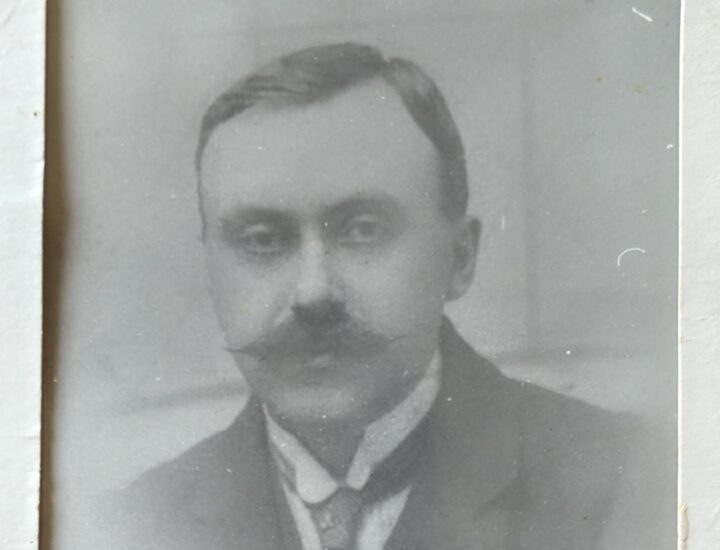
Gaston Emile Griffart, born in Paris in 1877, was a French pastry chef living in London when the war broke out. Registered on the mobilisation lists, he was 36 years old when he was called up as a Private, service number 118, in the 224th Infantry Regiment.
He found himself on the front line during the Battle of the Marne and was killed in action on 15 September 1914.
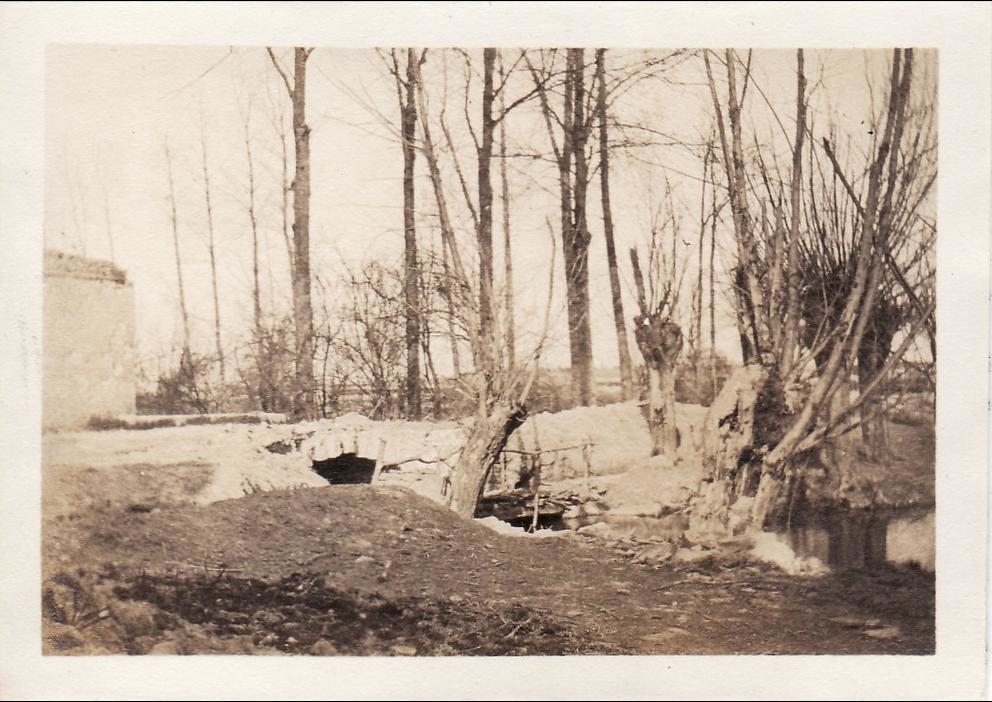
Like many other men, Gaston was reported missing after defending the bridge in the hamlet of La Neuville, which no longer exists today. His body was never found. He was posthumously awarded the Military Cross (Croix de Guerre) with a star.
He was survived by his wife Clara and their children, Emile and Maud – Raymond Huggins’ mother – in London. Shortly after the war, they emigrated to Australia.
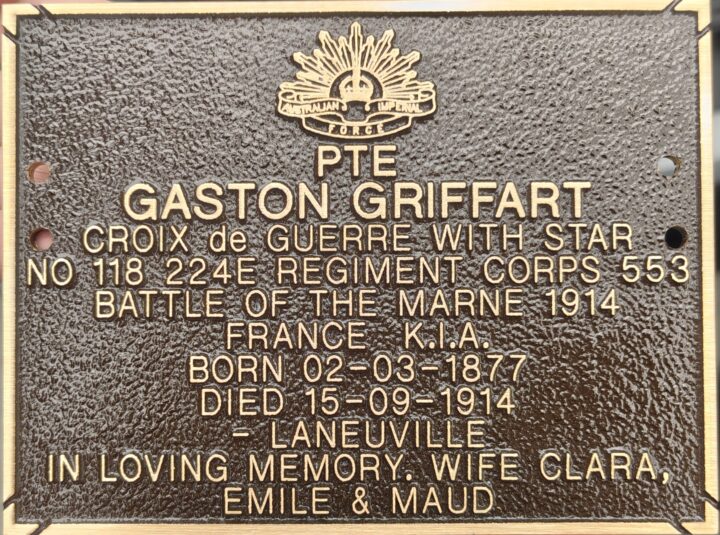
Years passed, and while the Huggins family was conducting genealogical research, the name Gaston Griffart, the French pastry chef, intrigued them. One search led to another and his story was revealed. Raymond Huggins decided to pay tribute to his grandfather by organising a plaque as close as possible to the place of his death, near La Neuville.
With the precious help of Jennie Girard, an Australian expatriate living in France, and her son Marc, Raymond Huggins was able to get in touch with Claude Fricotté and the veterans’ association of Cormicy, a town not far from La Neuville.
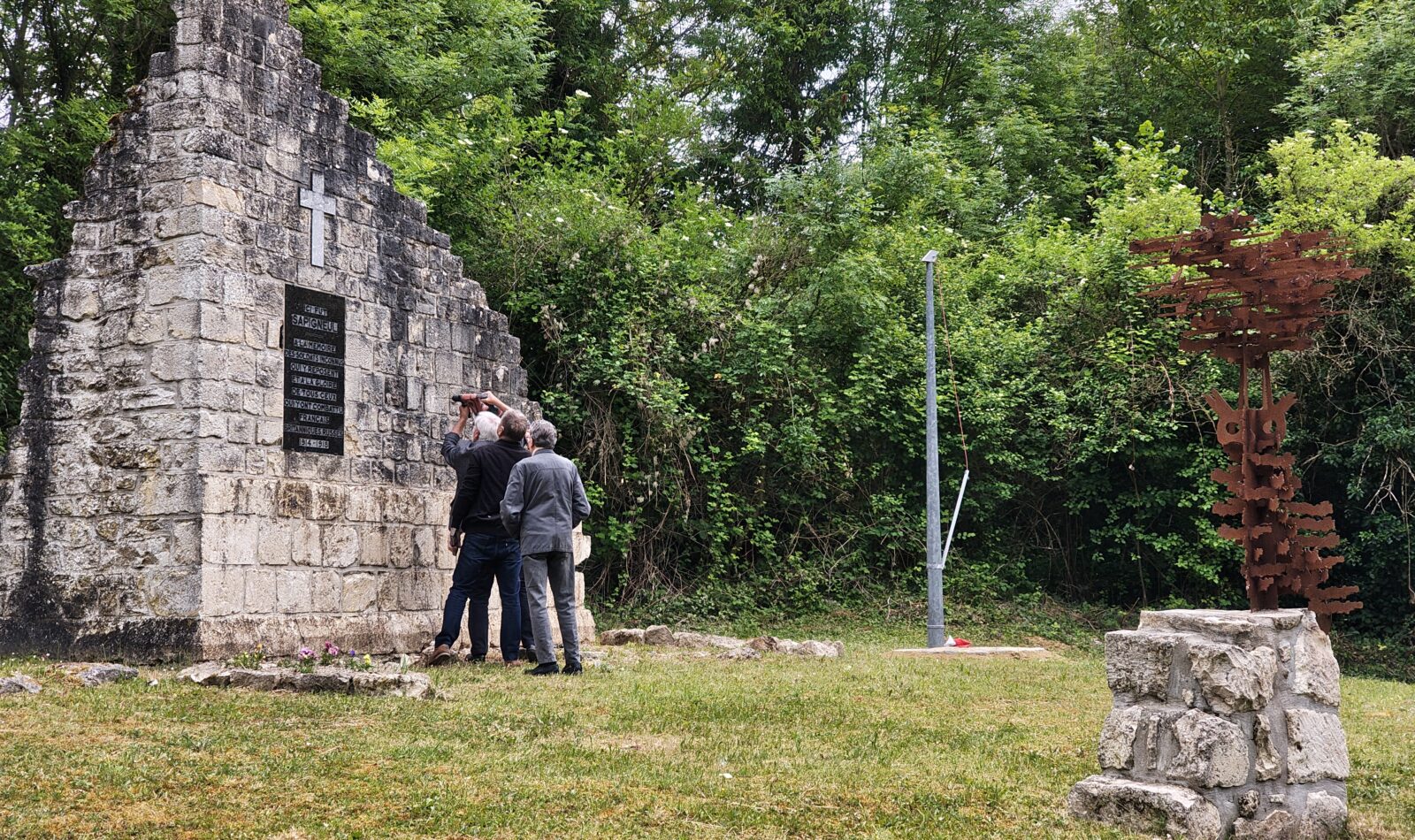
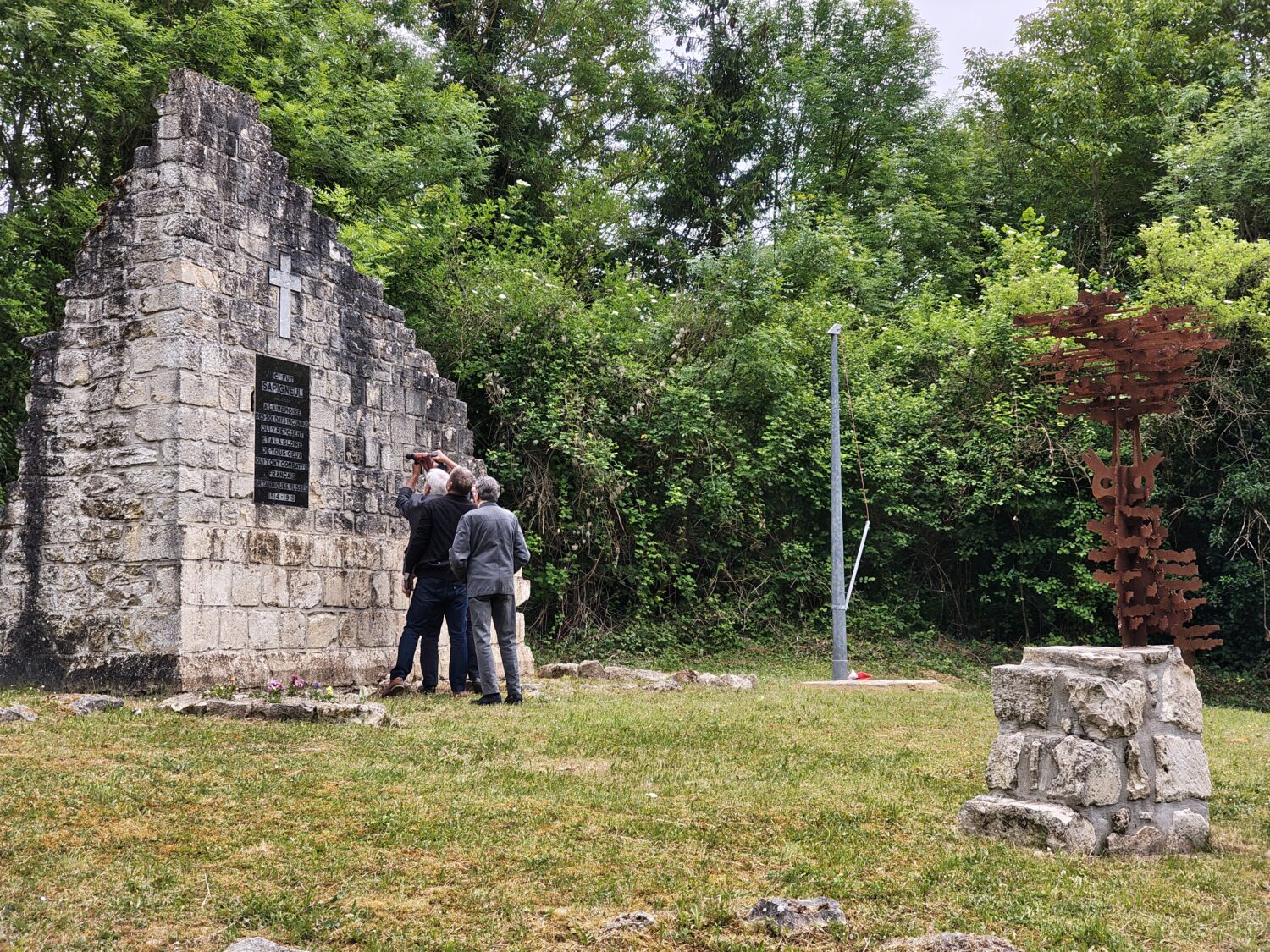
It was ultimately thanks to them that a commemorative service was held on 17 May 2025 to unveil a plaque at the ruins of the church in the village of Sapigneul, which had also been destroyed during the Battle of the Marne.
As nothing remains of La Neuville, this location was chosen for its proximity and setting, surrounded by nature, but also for its symbolic significance, as a few years earlier, a descendant of a German soldier had erected a sculpture of an owl in tribute to the soldiers who fell and disappeared during this battle. The symbol itself was chosen based on a poem written by a German soldier during the same battle, entitled ‘The Owl of Sapigneul’.
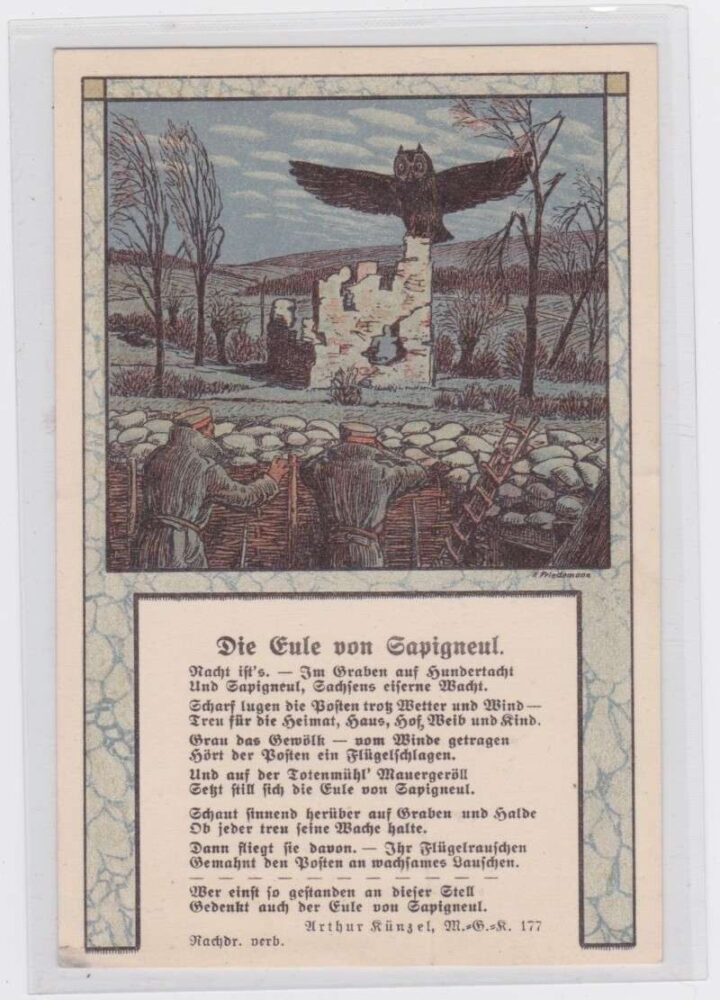
It is night-time in the trenches of Hill 108 and Sapigneul, the Saxon stronghold.
The sentries are at their posts despite the weather and the wind,loyal to their country, their homes, their farms, their wives and children.
A grey cloud carried by the wind, the sentry hears a flapping of wings.
And on the wall of the ruined mill, the owl of Sapigneul stands quietly.
She gazes dreamily at the trenches and the mountainside, each faithfully guarding its power.
Then she flies away. The rustling of her wings reminds the sentries to remain vigilant.
Those who once stood in this place remember the owl of Sapigneul
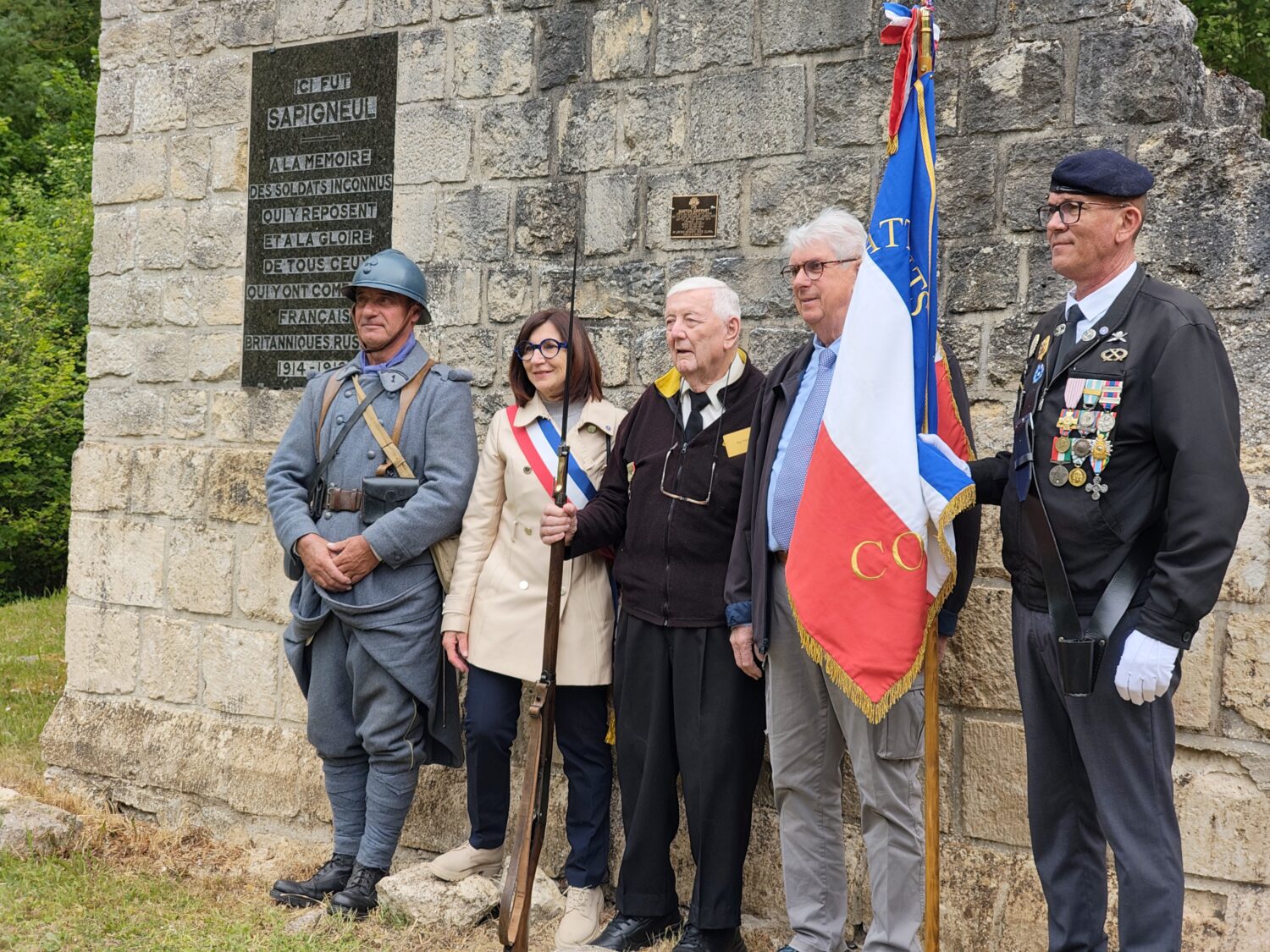
This service and the initiative by Raymond Huggins, who has travelled from Australia to commemorate a French soldier reported missing in action, reminds us of the strength and importance of Franco-Australian friendship and ensure that the memory of the soldiers from all the nations involved in the First World War is kept alive.